 Caves, terraces, waterfalls and wild places of Vietnam, season by season
Understand
Vietnam's UNESCO Global Geoparks: what the title means on the ground
Vietnam has four UNESCO Global Geoparks: Dong Van Karst Plateau, Non Nuoc Cao Bang, Dak Nong and, since 2025, Lang Son. The title is about rock and the people who live on it, not a fenced park, and that changes what a visit looks like.
What a UNESCO Global Geopark is
A UNESCO Global Geopark is an area with geology of international significance, managed with protection, education and local development together. It is not a national park: people live and farm inside it, towns and roads run through it, and there is usually no single gate or ticket. The title is reviewed periodically; Dong Van, for example, was revalidated in 2014 and 2019 and celebrated a third recognition in October 2023.
For a visitor, that means the geopark is the landscape you drive or walk through. The highlights are geosites — a canyon, a cave, an outcrop, a pass — often with information boards, linked by roads.
Sources: Ha Giang provincial portal — Dong Van recognised for a third time; UNESCO — Dong Van Karst Plateau UNESCO Global Geopark · last checked .
The four geoparks side by side
| Geopark | Recognised | Area | Province since July 2025 | Known for |
|---|---|---|---|---|
| Dong Van Karst Plateau | Global Geoparks Network 2010; UNESCO Global Geopark 2015 | 2,356 km² | Tuyen Quang (was Ha Giang) | Karst plateau, Ma Pi Leng, Tu San canyon |
| Non Nuoc Cao Bang | 12 April 2018 | More than 3,270 km² | Cao Bang | Karst, underground rivers, Ban Gioc |
| Dak Nong | 7 July 2020 | About 4,760 km² | Lam Dong (was Dak Nong) | Volcanic craters, caves and waterfalls |
| Lang Son | Announced 17 April 2025 | About 4,842.58 km² | Lang Son | Karst, Huu Lien Nature Reserve |
Sources: UNESCO — Dong Van Karst Plateau UNESCO Global Geopark; Government news portal — Non Nuoc Cao Bang recognised (2018); Government news portal — Dak Nong recognised (2020); Ministry of Natural Resources and Environment — Lang Son Global Geopark; Government news portal — Lang Son becomes a UNESCO Global Geopark (June 2025); Resolution 202/2025/QH15 on provincial reorganisation, LuatVietnam text · last checked .
Dong Van Karst Plateau
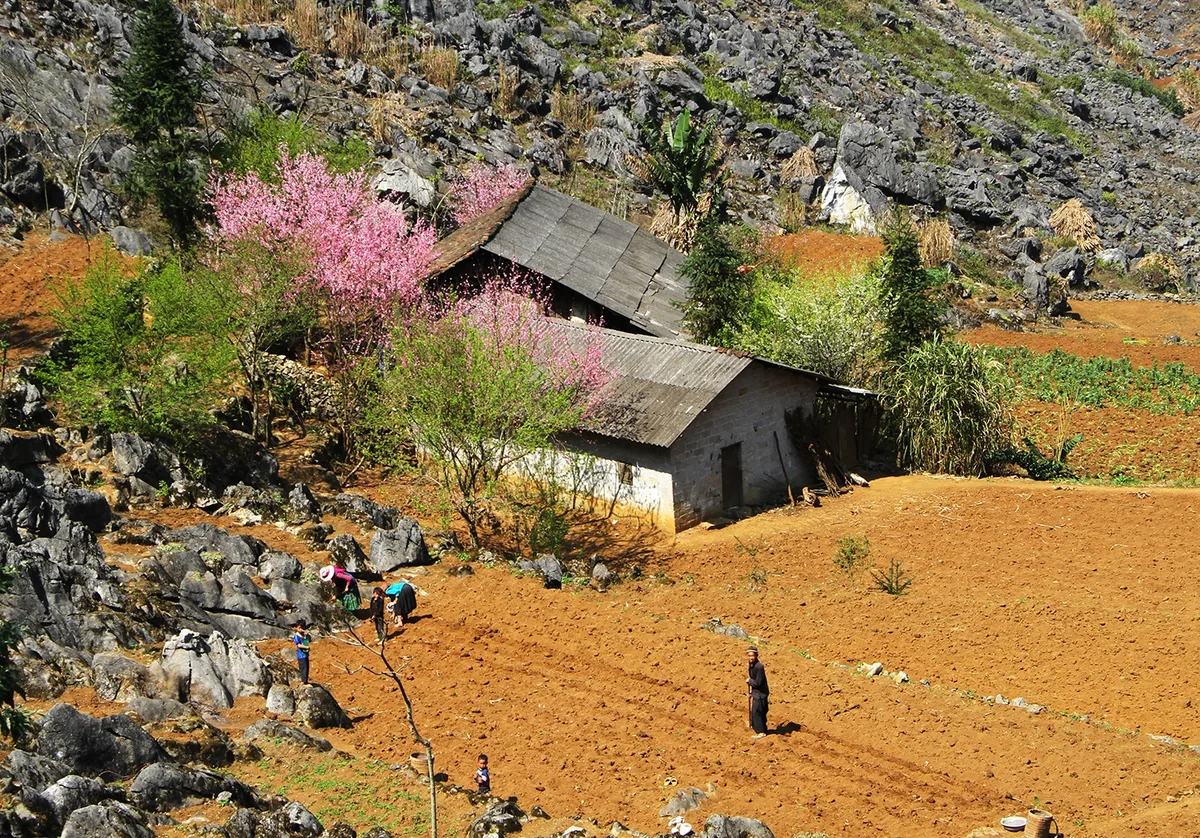
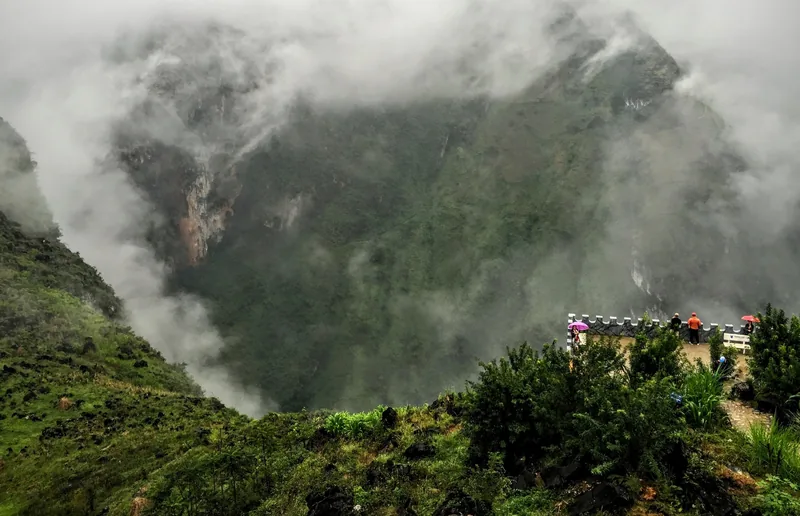
The first geopark in Vietnam covers 2,356 km² on the Chinese border, with karst on about 60 per cent of the surface. Rocks run from the Cambrian, about 550 million years ago, to the present, and include two mass-extinction boundaries. The plateau is home to 17 ethnic groups and about 200 Tonkin snub-nosed monkeys. Its highest point is Mieu Vac at 1,971 metres, and the Tu San canyon is 700 to 800 metres deep. Details on the Dong Van page.
Sources: UNESCO — Dong Van Karst Plateau UNESCO Global Geopark · last checked .
Non Nuoc Cao Bang
Recognised by the UNESCO Global Geoparks Council in April 2018, it covers more than 3,270 km² across nine districts of Cao Bang province. Its geology includes classic karst, underground and surface rivers, lakes, pillow basalts, ultramafic and granitic intrusions, and sedimentary rocks about 500 million years old with fossils that record past environments and mass extinctions. Ban Gioc Waterfall and Nguom Ngao Cave are inside it; see the Ban Gioc page.
Sources: Government news portal — Non Nuoc Cao Bang recognised (2018) · last checked .
Dak Nong
Recognised by the UNESCO Executive Board in July 2020, the geopark covers about 4,760 km² in the Central Highlands. The government news portal described its craters, waterfalls and a system of hundreds of volcanic caves. Since the 2025 merger, Dak Nong is part of Lam Dong province, so the geopark now sits in the same province as Da Lat.
It is the least visited of the four by foreign travellers and the hardest to explore independently; many cave sites are reached only with local guidance.
Sources: Government news portal — Dak Nong recognised (2020); Resolution 202/2025/QH15 on provincial reorganisation, LuatVietnam text · last checked .
Lang Son
UNESCO announced Lang Son as one of 16 new UNESCO Global Geoparks on 17 April 2025, after the Global Geoparks Council voted in September 2024; the certificate was presented in Paris in June 2025. The ministry gives an area of about 4,842.58 km² covering Bac Son, Chi Lang, Huu Lung, Loc Binh, Van Quan, Lang Son city and parts of Binh Gia and Cao Loc. The Huu Lien Nature Reserve, 8,293.4 hectares, records 794 vascular plant species and 57 mammal species.
Lang Son is the closest of the four to Hanoi and the newest, so visitor information is still thin. We will add detail as official geosite information becomes available.
Sources: Ministry of Natural Resources and Environment — Lang Son Global Geopark; Government news portal — Lang Son becomes a UNESCO Global Geopark (June 2025) · last checked .
Getting to each geopark
- Dong Van: about six to seven hours from Hanoi to Ha Giang city by car or sleeper bus, then mountain roads north through Quan Ba.
- Non Nuoc Cao Bang: about six to eight hours by sleeper bus from Hanoi to Cao Bang city; Ban Gioc is a further 85 to 89 km.
- Lang Son: the nearest of the four to Hanoi, on the main road towards the Chinese border; we have not sourced journey times to individual geosites.
- Dak Nong: in the Central Highlands, now within Lam Dong province; we have not sourced journey times, and local guidance is the practical way to reach the volcanic caves.
Inside each geopark, distances between geosites are long and public transport is thin. Most visitors use a car with a driver or a motorbike, and plan a route rather than a single stop. The UK Foreign Office advice on motorbikes applies here as everywhere: inexperienced riders should not hire one.
Sources: Vietnam National Authority of Tourism — Ha Giang; Jungle Boss — Ban Gioc tickets and transport (commercial operator blog); Vietnam National Authority of Tourism — Ban Gioc Waterfall; Resolution 202/2025/QH15 on provincial reorganisation, LuatVietnam text; UK Foreign Office — Vietnam safety and security · last checked .
Visiting a geopark well
- Look for the geopark visitor centre or information boards; they explain what a roadside outcrop actually is.
- Do not take rocks or fossils; collecting damages the very thing the title protects.
- Remember that villages inside the geopark are homes, not exhibits.
- Plan around the weather: all four geoparks are in mountainous or upland terrain where rain closes roads.
More on the responsible visiting page.
Common questions
Questions readers ask
How many UNESCO Global Geoparks does Vietnam have?
Four: Dong Van Karst Plateau, Non Nuoc Cao Bang, Dak Nong and Lang Son, the newest, announced in April 2025.
Is a geopark the same as a national park?
No. People live and farm inside a geopark, and there is usually no single entrance or ticket. National parks are protected forest areas with rules on access.
Do I need a ticket to enter a geopark?
Not for the geopark as a whole. Individual sites inside it, such as Ban Gioc or a cave, have their own tickets.
Related
Read next
Places · Tuyen Quang
Dong Van Karst Plateau
The geopark, Ma Pi Leng and the Nho Que canyon, seasons, permits, the road from Hanoi and when to skip it.
Read more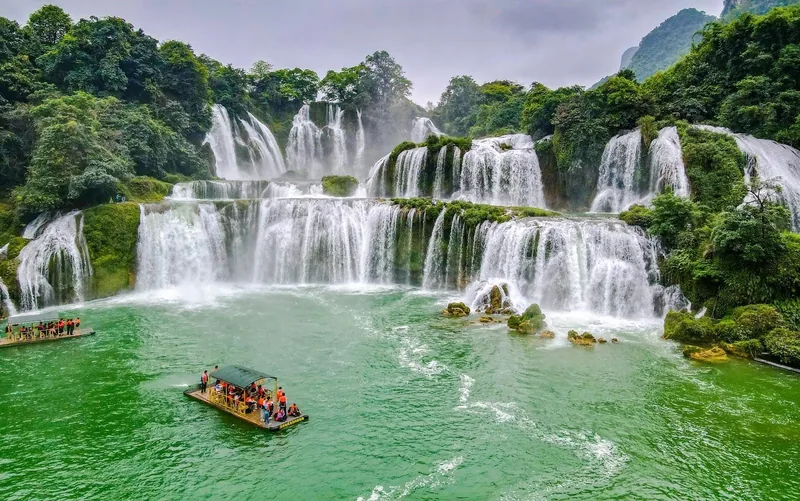
Places · Cao Bang
Ban Gioc Waterfall
Flow month by month, the border rules, tickets, transport from Hanoi and Cao Bang, and when to skip it.
Read more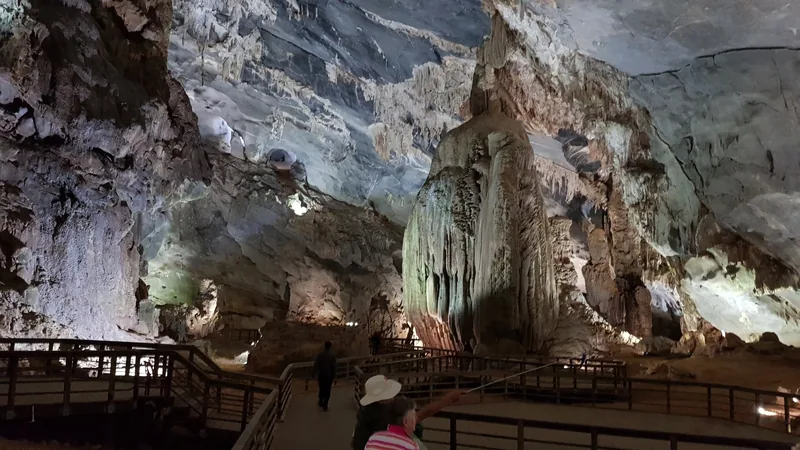
Understand
Caves
Walk-in caves, guided adventure caves and expedition caves: what each involves, with seasons and limits.
Read more
Understand
Responsible visiting
Practical rules for caves, terraces, national parks, geoparks and border areas.
Read more
Places
Places
Side-by-side comparison of the four places covered in depth: seasons, travel times and access.
Read more
Start planning
Send a correction or a question
Tell us which page you are writing about, what you found on the ground or on an official site, and when. A link to the source helps us check it.