 Caves, terraces, waterfalls and wild places of Vietnam, season by season
Understand
National parks and wildlife: what you will realistically see
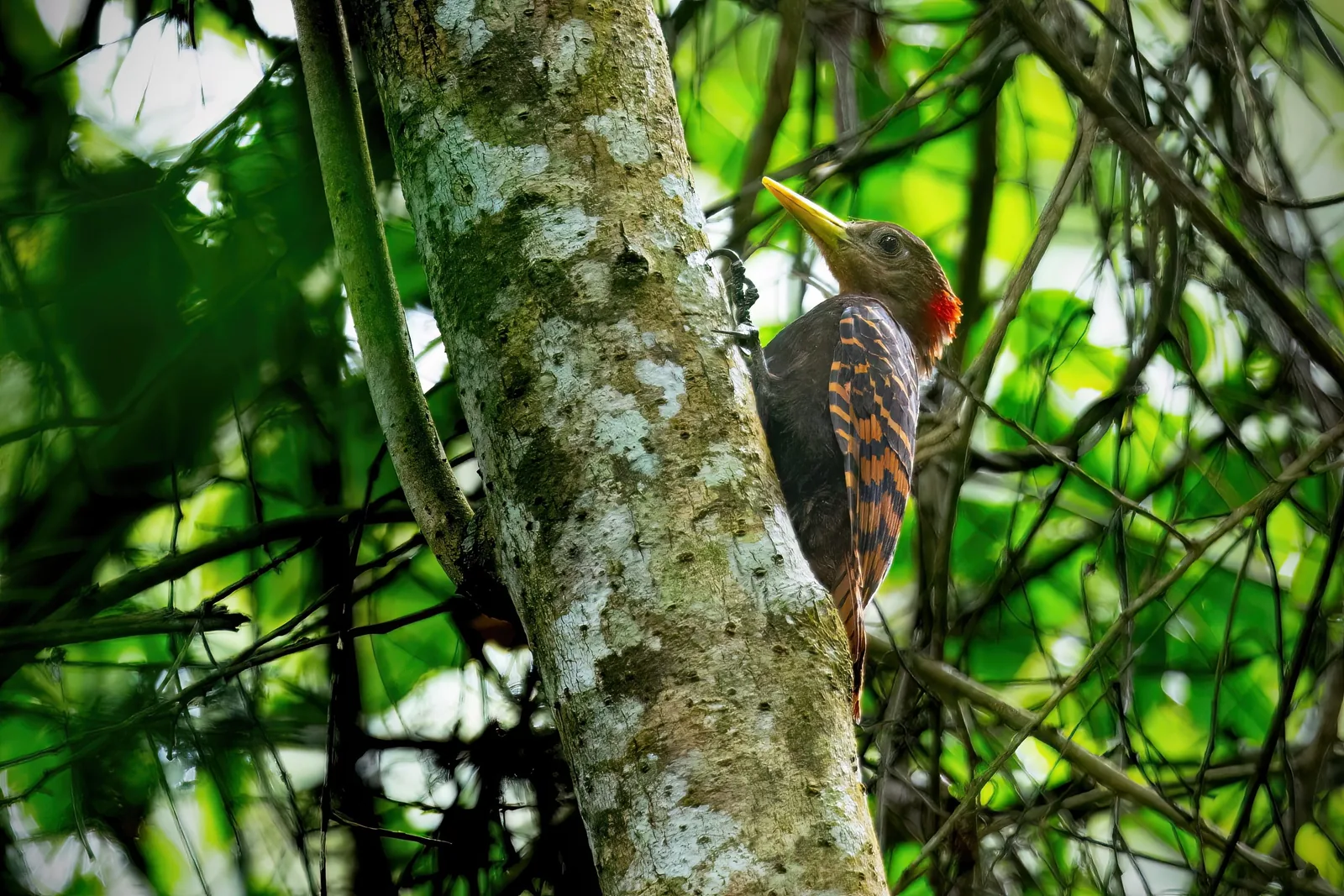
Vietnam's national parks hold rare primates, wild cattle and pheasants, but most of them are shy, nocturnal or few. This page is honest about the odds: what you are likely to see on a normal visit, what needs luck or a night outing, and what is gone.
Set expectations first
Tropical forest hides animals. On a daytime walk in any Vietnamese national park, most visitors see birds, butterflies, insects, enormous trees and perhaps a squirrel. Mammals are mainly seen at dawn, at dusk, at night with a spotlight, or at rescue centres. That is not a failure of the park; it is how forest wildlife behaves after decades of hunting.
The clearest example of what can be lost is the Javan rhinoceros. The last one in Vietnam was found dead in Cat Tien in April 2010 with its horn removed, and the species was declared extinct in the country in 2011.
Sources: TRAFFIC — Javan rhino extinct in Viet Nam (2011) · last checked .
Likely, possible and lucky
| Park | Likely on a normal visit | Possible with effort | Lucky or rare |
|---|---|---|---|
| Cuc Phuong | Butterflies in April–May, birds, giant trees, rescued primates at the centre | Civets, squirrels, lorises on a night walk | Wild primates in the forest |
| Cat Tien | Gibbon song at dawn, birds, deer near grassland | Gibbons seen on a dawn trek; gaur, civets on a night safari | Siamese crocodiles at Bau Sau in late afternoon |
| Bach Ma | Forest birds, views on clear days | Silver pheasant on forest trails | Crested argus or Edwards’s pheasant |
This table is our summary of what the cited sources report, not a promise. Seasons, the guide and plain luck change the result.
Sources: Vietnam National Authority of Tourism — Cuc Phuong; Viet Nam News — butterfly season in Cuc Phuong (2019); Wikivoyage — Cat Tien National Park (community guide); vietnamtourism.com — Cat Tien gibbons and night safaris (commercial guide); Oriental Bird Club — Bach Ma National Park (2001 bulletin) · last checked .
Cuc Phuong
Established in 1962 as Vietnam's first national park, Cuc Phuong covers about 22,200 hectares of limestone forest roughly 120 kilometres south-west of Hanoi, in what is now Ninh Binh province. Its Endangered Primate Rescue Centre was founded in 1993 with the Frankfurt Zoological Society and holds more than 180 primates of 15 species, including Delacour's langur; a Turtle Conservation Center works on tortoises and freshwater turtles.
Butterfly season is April and May, with about 400 species recorded, and is also the busiest time. January to April suits birdwatching. Night viewing of civets, squirrels and lorises is typically possible between about 19:00 and 21:00. Entry is reported at VND 60,000 for adults; check before you go.
Sources: Vietnam National Authority of Tourism — Cuc Phuong; Viet Nam News — butterfly season in Cuc Phuong (2019); Vinpearl — Cuc Phuong guide (commercial guide); Resolution 202/2025/QH15 on provincial reorganisation, LuatVietnam text · last checked .
Cat Tien
Cat Tien's core zone is 71,920 hectares across the former Dong Nai, Lam Dong and Binh Phuoc provinces, about 150 kilometres from Ho Chi Minh City. It is part of the Dong Nai Biosphere Reserve and contains the Bau Sau wetland, a Ramsar site since 2005, where about 100 Siamese crocodiles live and where gaur, deer and wild boar come to feed in the dry season. The conservation agency counts 1,610 plant and 1,568 animal species.
The realistic highlights are the dawn gibbon trek — a ferry around 04:45 and a walk to a listening post, reported at about VND 650,000 — and a night safari of about two hours, reported at about VND 180,000. The Dao Tien centre on an island upstream rehabilitates golden-cheeked gibbons, black-shanked doucs, silvered langurs and pygmy lorises rescued from the wildlife trade. The Bau Sau walk is about 5 kilometres each way after 9 kilometres by road and needs a permit, reported at VND 60,000.
Go in the dry season, December to April. Rains start around mid-May and peak from July to September, when roads can flood and leeches are common on the Crocodile Lake trail.
Sources: Nature and Biodiversity Conservation Agency — Cat Tien National Park; Nature and Biodiversity Conservation Agency — Bau Sau Ramsar site; Wikivoyage — Cat Tien National Park (community guide); vietnamtourism.com — Cat Tien gibbons and night safaris (commercial guide) · last checked .
Bach Ma
Bach Ma rises to 1,448 metres between Hue and Da Nang, about 45 kilometres from Hue. A 1996 list recorded 330 bird species, and seven of Vietnam's twelve pheasant species occur or have occurred there, including an endemic subspecies of silver pheasant and the crested argus. The ornithological bulletin we cite dates from 2001, so access details may have changed.
Timing is decisive. The summit receives around 8,000 millimetres of rain a year, most of it between September and November; April to July is the birding season, before the rains, and January to March is cool and drizzly.
Sources: Oriental Bird Club — Bach Ma National Park (2001 bulletin) · last checked .
Rescue centres versus the wild
Rescue centres are where most visitors see Vietnam's rare primates up close. That is worth doing, and the entrance fees and donations support the work. It is not the same as seeing wild animals, and a good guide will say so. In the forest, listening counts: gibbon calls at dawn at Cat Tien are far more likely than a clear view.
- Do not feed or touch animals, wild or captive.
- Keep voices down on trails and at the listening posts; noise ends the morning for everyone.
- On night safaris, ask the guide to keep the spotlight off animals once spotted.
- Book activities at the park visitor centre where possible; one guide reports that hotels can charge nearly double.
Common questions
Questions readers ask
Where am I most likely to see gibbons?
Cat Tien, on a dawn trek. You are more likely to hear them than see them clearly; there is a rescue centre at Dao Tien.
When is butterfly season in Cuc Phuong?
April and May, with about 400 species recorded. It is also the park’s busiest period.
Are there rhinos in Cat Tien?
No. The last Javan rhino in Vietnam was found dead in Cat Tien in 2010 and the species was declared extinct in the country in 2011.
Which months are worst for leeches?
The rainy season. At Cat Tien that is roughly mid-May to November, with peak rain from July to September.
Related
Read next

Seasons
Nature calendar
Twelve months of terrace water, green and harvest, waterfall flow, cave season and park conditions.
Read more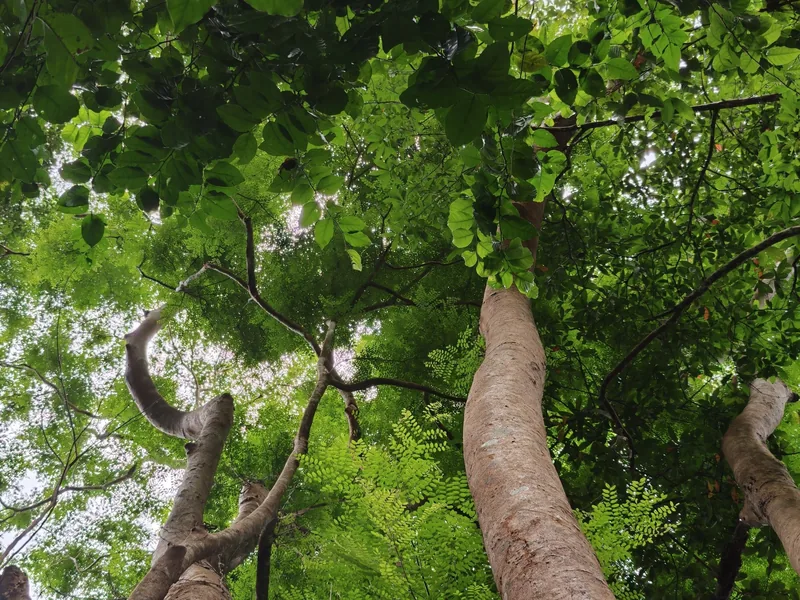
Understand
Responsible visiting
Practical rules for caves, terraces, national parks, geoparks and border areas.
Read more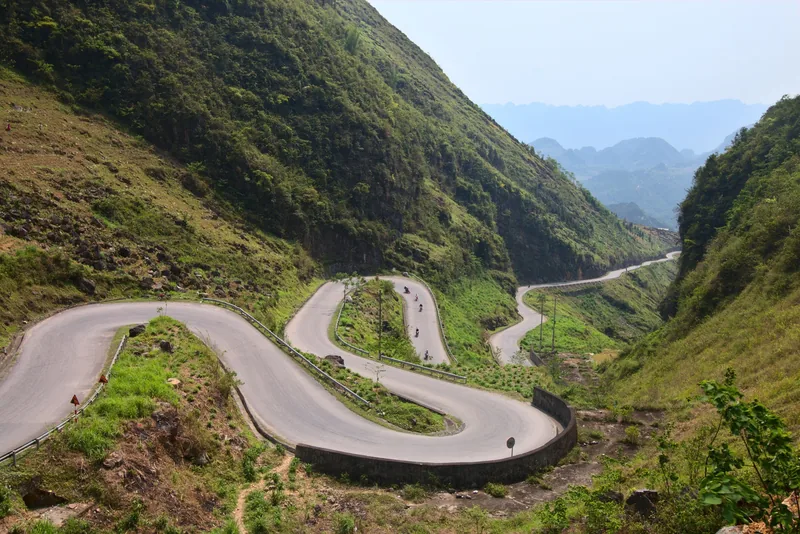
Understand
Weather and closures
Which months bring typhoons, floods and landslides, which sites they close, and how to plan around them.
Read more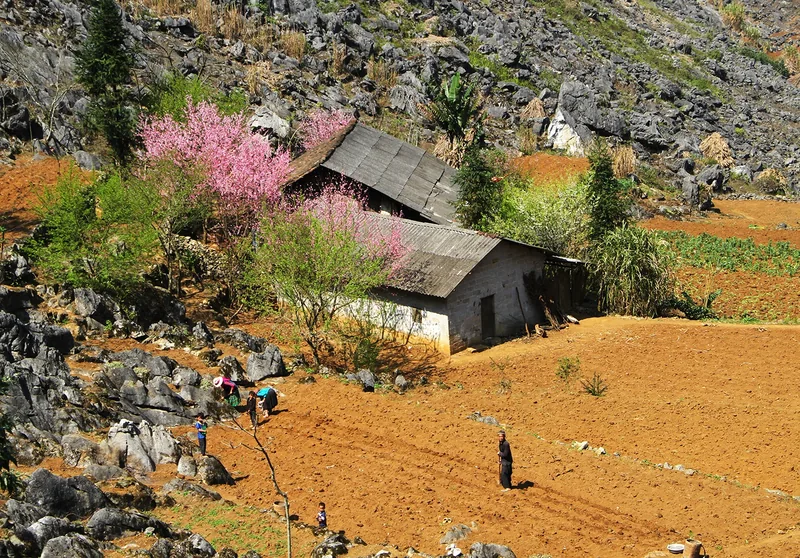
Understand
UNESCO Global Geoparks
The four UNESCO Global Geoparks: dates, areas, what each is known for and how to visit them.
Read more
Places
Places
Side-by-side comparison of the four places covered in depth: seasons, travel times and access.
Read more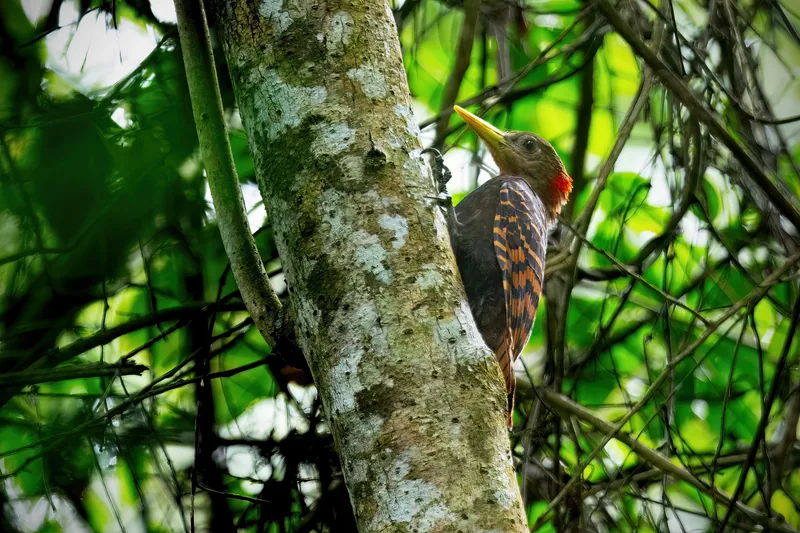
Start planning
Send a correction or a question
Tell us which page you are writing about, what you found on the ground or on an official site, and when. A link to the source helps us check it.