 Caves, terraces, waterfalls and wild places of Vietnam, season by season
Places · Cao Bang
Ban Gioc: a border waterfall that changes with the rain
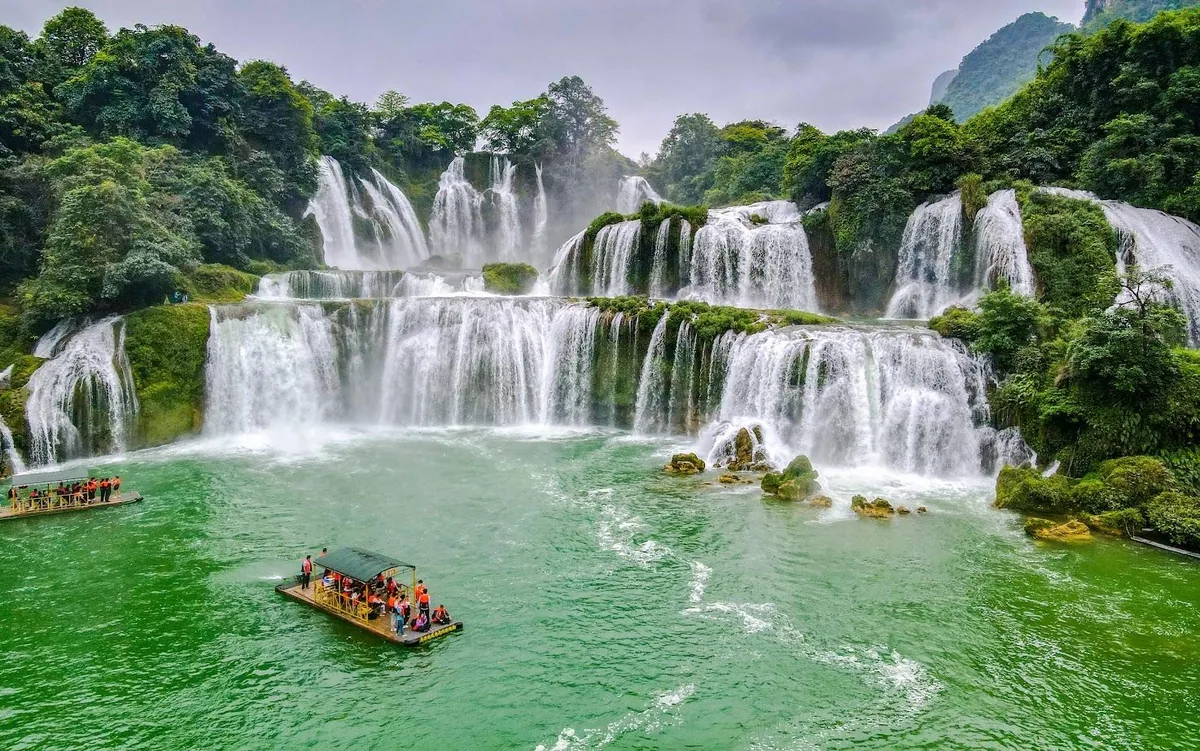
Ban Gioc is a broad, tiered waterfall on the Quay Son River, which forms the border with China. Its size on the day depends almost entirely on the month. It is also a border zone, which shapes what you can do there.
At a glance
- Province
- Cao Bang (unchanged in 2025)
- River
- Quay Son
- Width
- About 300 m
- From Cao Bang city
- 85–89 km, about 2–3 hours
- Fullest
- June to October
- Lowest
- Around March
What the waterfall is
The Quay Son River drops over a series of limestone steps along a front of about 300 metres. Descriptions of its height differ: the national tourism authority gives 53 metres, while the Vietnam Airlines travel guide and most independent guides describe a drop of about 30 metres in several tiers. The difference is probably whether the whole sequence of steps is measured or only the main fall. The tourism authority places it in Dam Thuy commune, about 89 kilometres north of Cao Bang city.
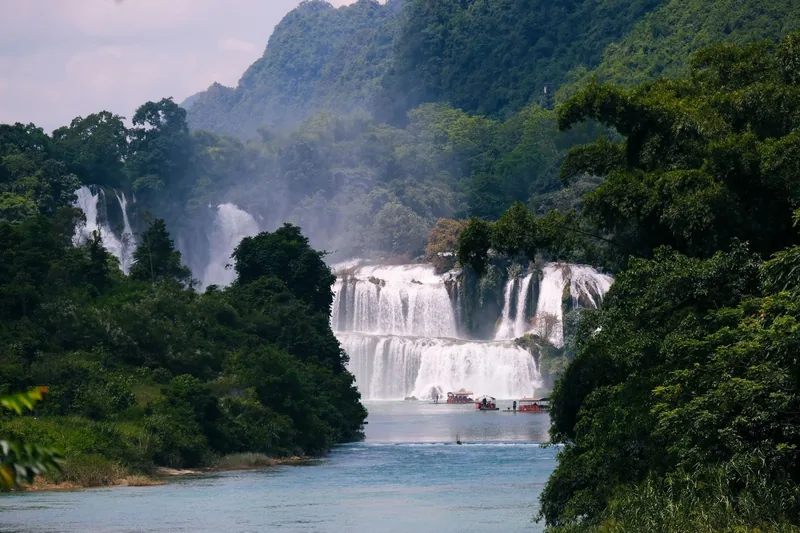
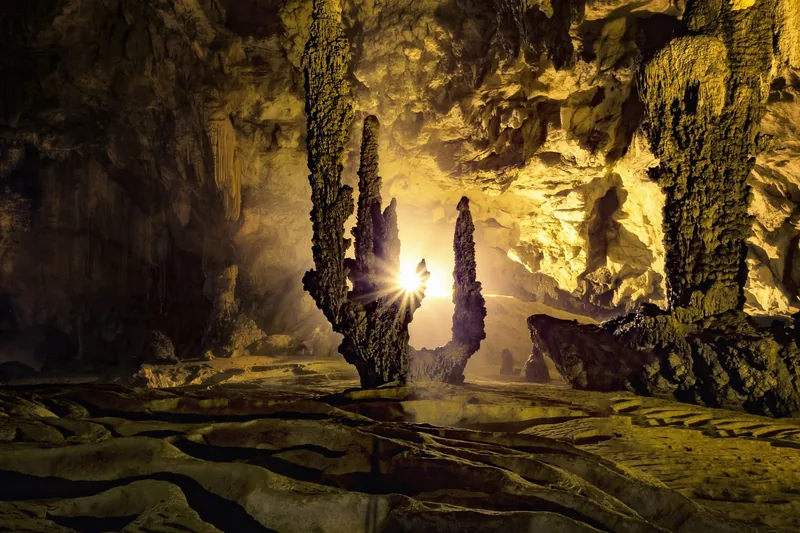
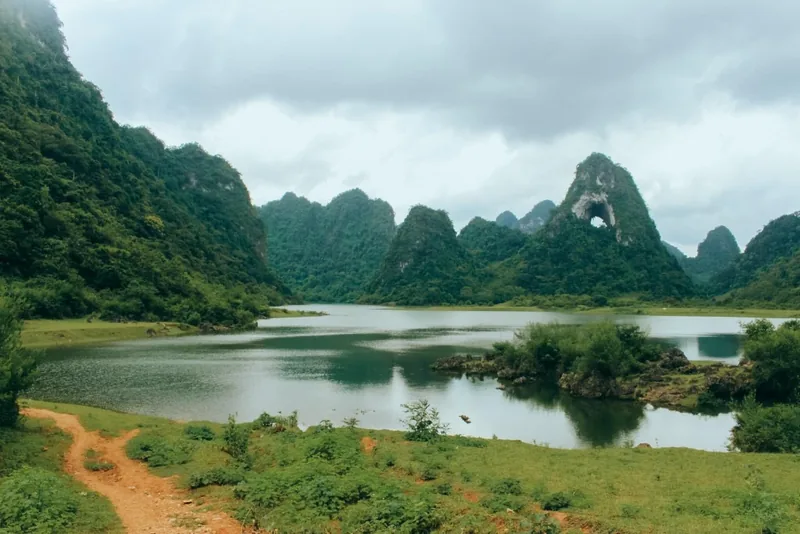
The river is the border. The falls on the far bank are Detian, on the Chinese side, and the two are seen as one landscape from the Vietnamese viewing area. Ban Gioc lies within the Non Nuoc Cao Bang UNESCO Global Geopark, and the Nguom Ngao cave is about three kilometres away.
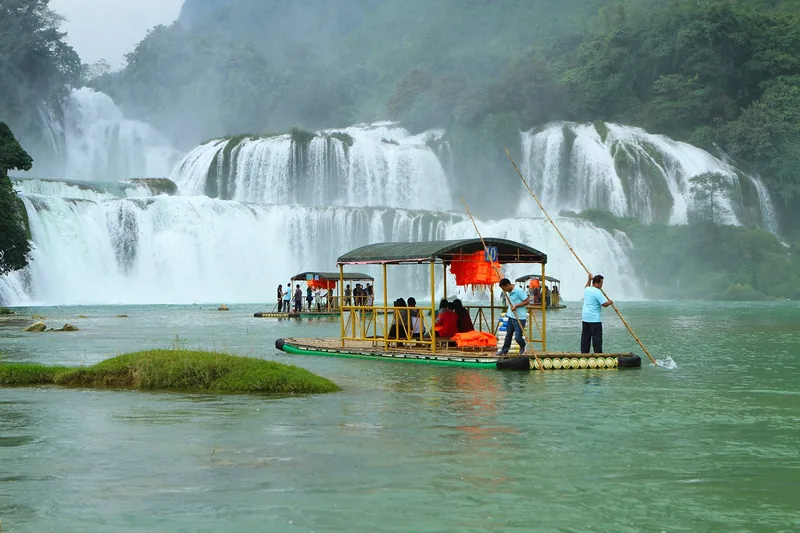
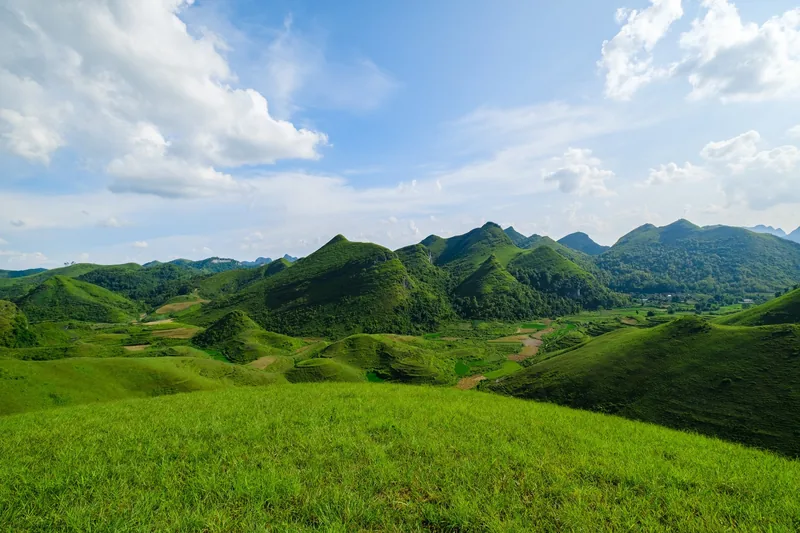
The site is developed: there is a ticket kiosk, paths to viewing points, bamboo rafts on the pool and a pagoda on the hill. It is busy at weekends and on Vietnamese holidays. The landscape around it — rice valleys and karst hills — is quieter than the falls themselves.
Sources: Vietnam National Authority of Tourism — Ban Gioc Waterfall; Vietnam Airlines travel guide — Ban Gioc Waterfall; Government news portal — Non Nuoc Cao Bang recognised (2018) · last checked .
Flow by month
Our reading of the cited guides: filled = high water with workable roads; half = good flow or low but clear; empty = lowest flow. June to August has the most water but the highest road risk.
| Months | What to expect |
|---|---|
| December to February | Gentle flow, very clear water; fog possible on the passes |
| March | Weakest flow of the year; the falls can look sparse |
| April to May | Flow rising as the rains return |
| June to August | Highest volume; heavy rain and landslide risk on the roads |
| September to October | Still high, clearer and bluer water, drier roads |
| November | Flow slightly reduced, river still blue |
An independent guide reports that in the dry months water is released from upstream between about 10:30 and 13:00, which can change the look of the falls over a single day. We could not confirm a schedule for that from an official source, so treat it as a tip to check locally.
Sources: Local Vietnam — Ban Gioc month by month (independent guide); Jungle Boss — Ban Gioc tickets and transport (commercial operator blog) · last checked .
Border-area rules
- Carry your passport. The airline guide and independent guides both say checks are possible near the border checkpoint, even though the ticket kiosk itself does not ask for documents.
- You cannot cross to Detian from the Vietnamese side as a foreign visitor. A pilot cross-border scheme opened from 2023 for Vietnamese and Chinese tourists, with advance registration, passports or border permits, and groups of up to twenty.
- Rafts on the pool are limited in number and kept away from the base of the falls on both sides.
- Swimming is not allowed except where guides or signs permit it; the pools have deep currents.
- Do not photograph military installations; the UK Foreign Office warns that border areas may be unmarked.
Sources: Vietnam Airlines travel guide — Ban Gioc Waterfall; Voice of Vietnam — Ban Gioc–Detian pilot tours; Tuoi Tre News — Ban Gioc–Detian pilot opening (May 2023); Jungle Boss — Ban Gioc tickets and transport (commercial operator blog); UK Foreign Office — Vietnam safety and security · last checked .
How many nights
A day trip from Cao Bang city is the usual plan: about two hours each way by car, or two and a half to four hours by local bus, plus two or three hours at the falls and Nguom Ngao. That means one night in Cao Bang city at the least, after six to eight hours on the road from Hanoi.
Staying a night near the falls lets you see them early, before the day visitors. The Vietnam Airlines guide suggests 07:00 to 09:30 to avoid the crowds. Two nights in the area also leaves time for Pac Bo or the geopark routes.
Sources: Jungle Boss — Ban Gioc tickets and transport (commercial operator blog); Vietnam Airlines travel guide — Ban Gioc Waterfall · last checked .
Getting there
From Hanoi, sleeper buses run to Cao Bang city in about six to eight hours, for around VND 200,000 to 400,000. From Cao Bang city, local buses run to the falls about ten times a day, starting around 05:30, with the last return in mid-afternoon; missing it means no same-day return. A private car costs around VND 800,000 to 1,200,000 one way.
Road distances quoted for Hanoi to Ban Gioc range from about 270 to 335 kilometres depending on the route. All of it is mountain road for the last stretch, so the time matters more than the distance.
Sources: Jungle Boss — Ban Gioc tickets and transport (commercial operator blog); Vietnam Airlines travel guide — Ban Gioc Waterfall · last checked .
What it costs, roughly
| Item | Reported price | Note |
|---|---|---|
| Entry ticket, adult | VND 45,000 | Children 1–1.3 m VND 20,000; cash only |
| Bamboo raft | VND 50,000 to 100,000 per person | Sources disagree |
| Nguom Ngao Cave | VND 45,000 | Lit route of about 1 km |
| Sleeper bus Hanoi–Cao Bang | VND 200,000 to 400,000 | 6 to 8 hours |
| Private car Cao Bang–falls | VND 800,000 to 1,200,000 one way | About 2 hours |
These figures come from a commercial operator's guide checked in October 2026; check before you go. We do not publish accommodation prices.
Sources: Jungle Boss — Ban Gioc tickets and transport (commercial operator blog) · last checked .
Pictures
Who should skip it, and when not to go
- Visitors in March and April who want a full waterfall: it can look thin until the rains return.
- Anyone driving or riding the mountain roads in heavy rain from June to August; the roads see landslides.
- Travellers hoping to cross to Detian Falls: the cross-border scheme is not open to third-country nationals.
- People with one day from Hanoi: the round trip alone is more than twelve hours.
- Those who dislike crowds, on weekends and Vietnamese public holidays.
Other pages that help
- Waterfalls and water levels
- UNESCO Global Geoparks of Vietnam
- Dong Van Karst Plateau, further west along the border
- Weather and site closures
Common questions
Questions readers ask
When is Ban Gioc fullest?
June to August has the most water, but the roads are riskiest then. September and October are the usual compromise: high water, clearer river and drier roads.
Do I need a border permit for Ban Gioc?
Independent guides report that no permit is needed to buy a ticket. Carry your passport, because checks are possible near the border checkpoint.
Can I walk over to the Chinese side?
Not as a foreign tourist. The cross-border pilot opened for Vietnamese and Chinese tourists only.
How long does it take from Hanoi?
Six to eight hours by sleeper bus to Cao Bang city, then about two hours by car to the falls.
Related
Read next
Understand
Waterfalls
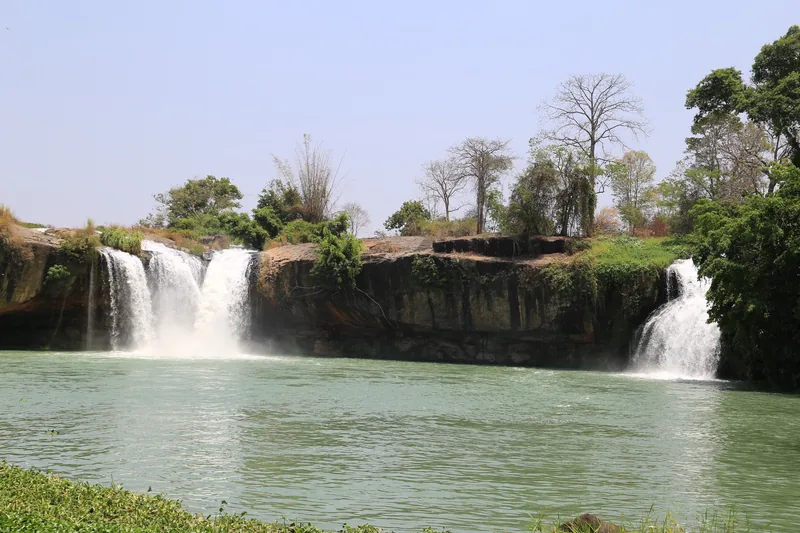
How flow changes through the year at Ban Gioc and Dray Nur, and when too much water closes the way.
Read more
Understand
UNESCO Global Geoparks
The four UNESCO Global Geoparks: dates, areas, what each is known for and how to visit them.
Read more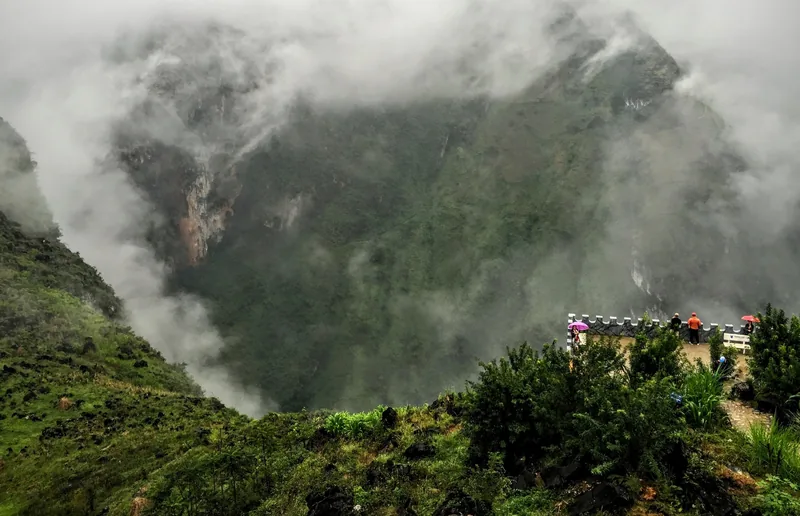
Places · Tuyen Quang
Dong Van Karst Plateau
The geopark, Ma Pi Leng and the Nho Que canyon, seasons, permits, the road from Hanoi and when to skip it.
Read more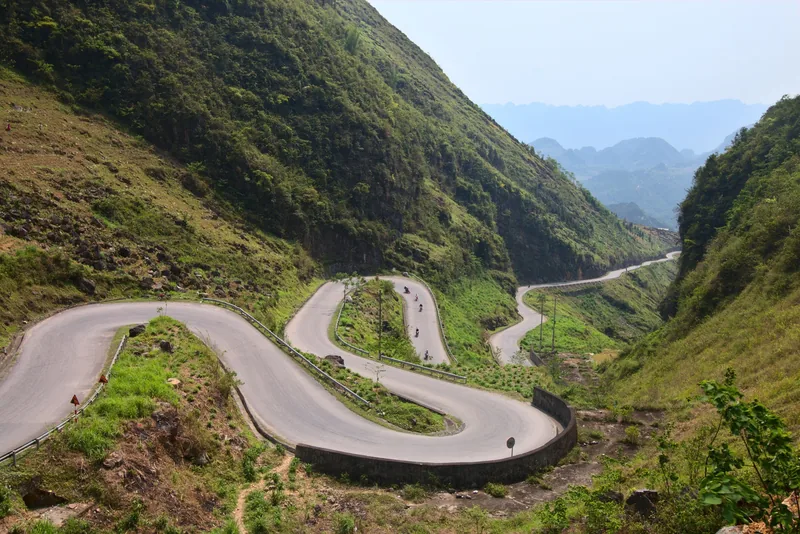
Understand
Weather and closures
Which months bring typhoons, floods and landslides, which sites they close, and how to plan around them.
Read more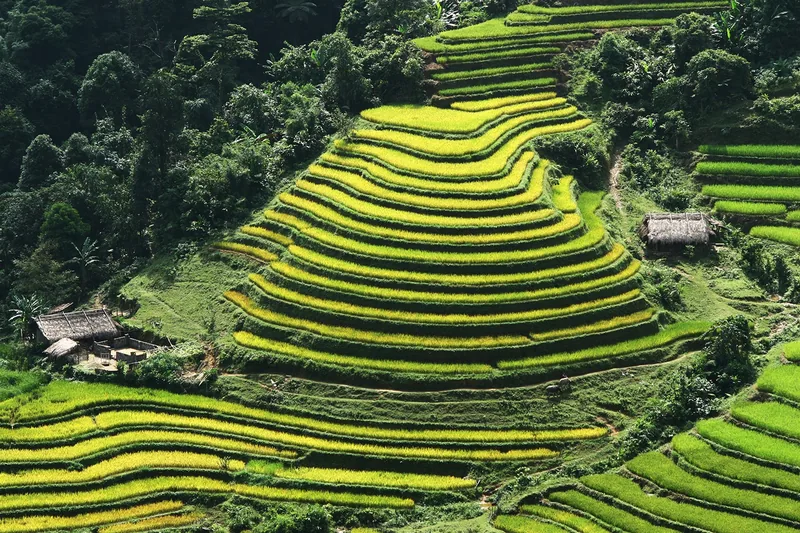
Seasons
Nature calendar
Twelve months of terrace water, green and harvest, waterfall flow, cave season and park conditions.
Read more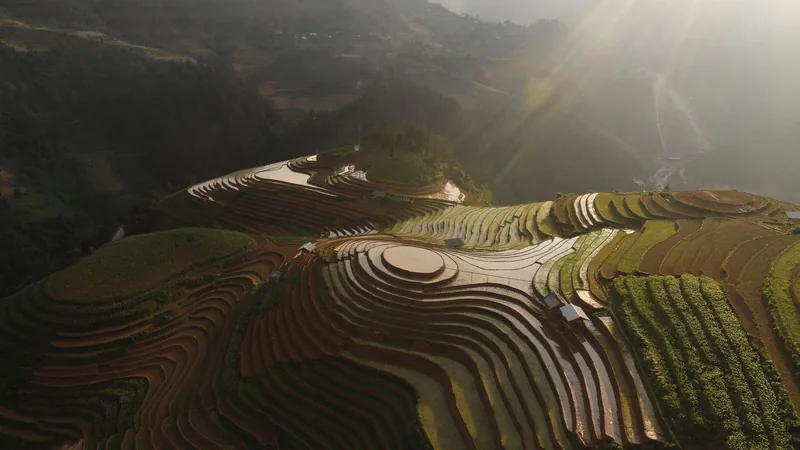
Places
Places
Side-by-side comparison of the four places covered in depth: seasons, travel times and access.
Read more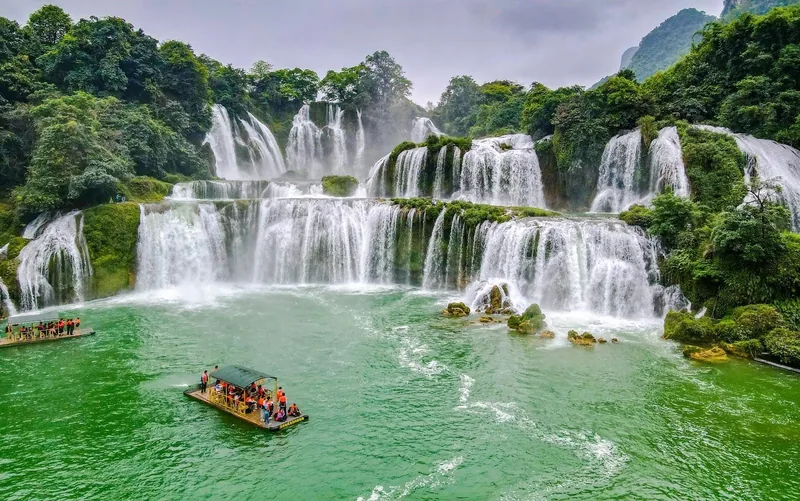
Start planning
Send a correction or a question
Tell us which page you are writing about, what you found on the ground or on an official site, and when. A link to the source helps us check it.