 Caves, terraces, waterfalls and wild places of Vietnam, season by season
Understand
Rice terraces by season: water, green, gold, then bare
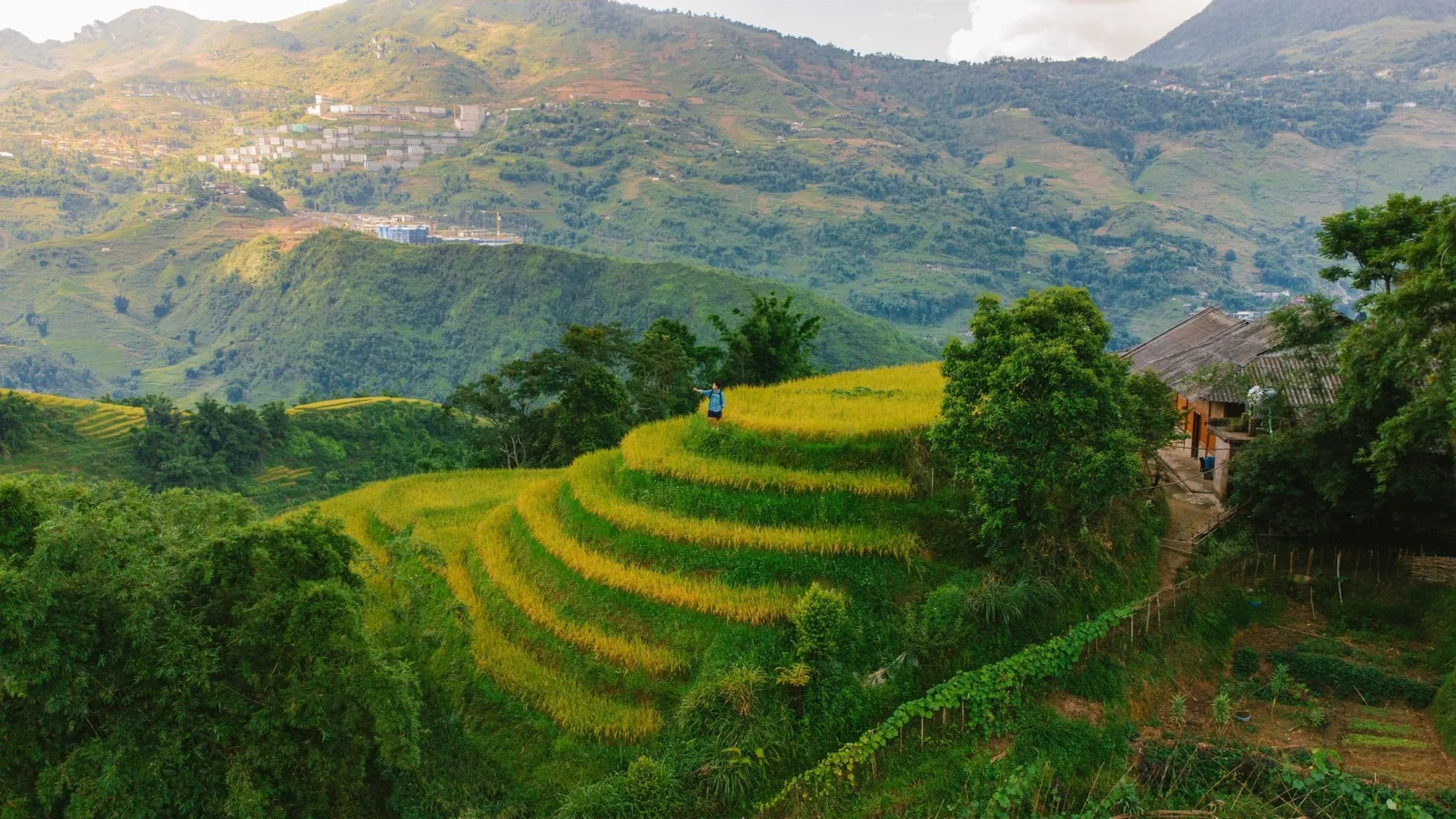
The terraces of northern Vietnam are farmland on a one-crop calendar. They look completely different from month to month, and the two moments most people travel for — water and gold — each last only a few weeks.
The farming year on the terraces
| Phase | Typical months in the north-west | What it looks like |
|---|---|---|
| Ploughing and water pouring | Late May to early June | Terraces flooded and reflective; buffalo and people in the fields |
| Young rice | June | Thin green lines on brown water |
| Green | July to August | Solid green steps; cloud and rain common |
| Golden | September to early October | Ripe rice, then harvesting by hand |
| Fallow | Late October to April | Stubble, then bare earth; misty and cold in winter |
These are the months the tourism authority and an independent guide give for Mu Cang Chai. The same pattern applies across the high north, shifted by altitude and by when the rains arrive in a given year. Lower fields ripen first; the highest fields can be a week or two behind.
Sources: Vietnam National Authority of Tourism — Mu Cang Chai water-pouring season; Local Vietnam — Mu Cang Chai guide (independent guide) · last checked .
Mu Cang Chai
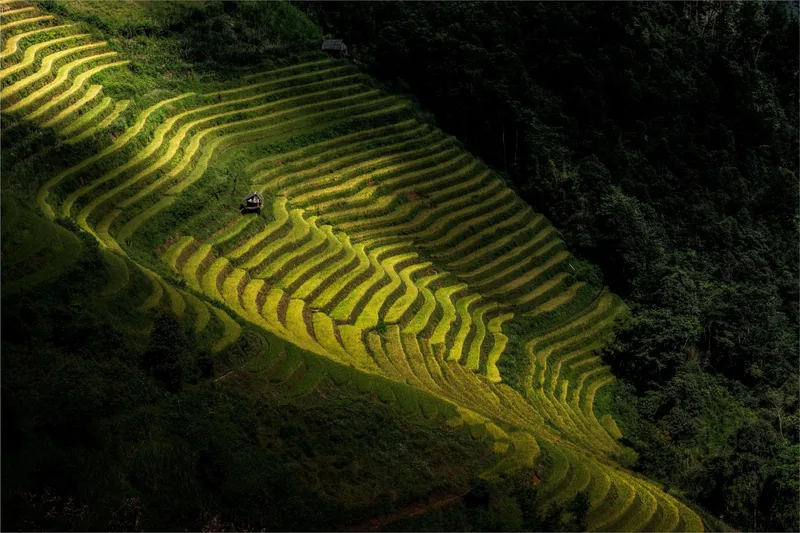
About 2,200 hectares of terraces in La Pan Tan, Che Cu Nha and De Xu Phinh are protected as a special national relic. Hmong farmers make up more than 90 per cent of the district. Water pouring is late May to early June; the harvest is September to October, with early October as the peak and many fields cut after the middle of the month. The full picture, with viewpoints and transport, is on the Mu Cang Chai page.
Sources: Government news portal — Mu Cang Chai terraces a special national relic; Vietnam National Authority of Tourism — Mu Cang Chai water-pouring season; Local Vietnam — Mu Cang Chai guide (independent guide) · last checked .
Hoang Su Phi
Hoang Su Phi, in the west of the former Ha Giang province and now part of Tuyen Quang, has terraces along the road towards Xin Man that are classified as national heritage. We could not confirm the year of that classification or the protected area from an official source.
For timing, the tourism authority gives September for golden rice across Ha Giang, which is a reasonable guide to Hoang Su Phi. It is far less visited than Mu Cang Chai, and further from the main Ha Giang road loop, which is both its appeal and the reason to plan transport carefully.
Sources: Wikipedia — Hoang Su Phi (secondary); Vietnam National Authority of Tourism — Ha Giang; Resolution 202/2025/QH15 on provincial reorganisation, LuatVietnam text · last checked .
Sa Pa
Sa Pa's terraces are in the valleys below the town, in what is now Lao Cai province. The tourism authority describes the climate as chilly and misty from December to March, with occasional snow in January; warm and clear from April to June; stormy and humid from June to August; and cool and dry from September to November.
The farming calendar follows the same broad pattern as Mu Cang Chai. The difference is scale and access: Sa Pa has more trails, more people walking them, and roads that have been damaged by recent storms. During Typhoon Yagi in September 2024, a road from Sa Pa to a nearby village was too dangerous to drive and trekking in the province was suspended.
Sources: Vietnam National Authority of Tourism — weather and climate; Associated Press via ClickOnDetroit — Typhoon Yagi flash flood (Sept 2024) · last checked .
Why dates move
- Rain. Fields are flooded when there is water to flood them. A late monsoon delays planting, and the harvest follows.
- Altitude. Higher fields are colder and ripen later; a single valley can show green and gold at once.
- Family decisions. Each household harvests when its own rice is ready and when it has the hands to cut it.
- Weather on the day. Cloud can sit in the valley for a morning. That is why two nights matter more than the exact date.
If you can only travel on fixed dates, choose the middle of a window rather than its edge: the first week of June rather than the last of May, the last two weeks of September rather than mid-October.
What you will not see in winter
From late October to April the terraces are cut and then bare, and the hills are often in cloud. The structure of the terraces is still visible, and the light can be good on clear winter days, but the photographs that made these places known are not taken in these months. If winter is your only option, the caves of Phong Nha and the dry season in Cat Tien are better matches; see the nature calendar.
Planning around one window
Choose either water or gold; few trips can do both, because they are four months apart. For water, travel in the first days of June and stay two nights so that one clear morning is likely. For gold, aim for the last two weeks of September and accept that weekends near the harvest festival fill homestays. In both cases, check with your accommodation a week ahead: the people farming the fields know whether the year is early or late.
Sources: Vietnam National Authority of Tourism — Mu Cang Chai water-pouring season; Local Vietnam — Mu Cang Chai guide (independent guide) · last checked .
Visiting working farmland
- Stay on the paths and terrace edges that people use; the walls are built and repaired by hand.
- Do not walk through planted or flooded fields, and never fly a drone low over people working.
- Ask before photographing people, especially children, and accept a no.
- Viewpoints on private land may charge a small fee; carry small notes.
More on this on the responsible visiting page.
Common questions
Questions readers ask
When are the terraces full of water?
Late May to early June at Mu Cang Chai, according to the tourism authority. Dates move with the rains.
When is the rice golden?
September to early October in the high north. Many fields at Mu Cang Chai are harvested after about 15 October.
Is Sa Pa or Mu Cang Chai better for terraces?
They suit different trips. Mu Cang Chai has a protected terrace area and fewer trails; Sa Pa has more trekking routes and more visitors. Both follow the same farming calendar.
Can I see terraces in December?
You can see the shapes of the terraces, but the fields are cut or bare and often under cloud.
Related
Read next
Places · Lao Cai
Mu Cang Chai
Planting, green and harvest months, the viewpoints, the road from Hanoi, rough costs and when not to go.
Read more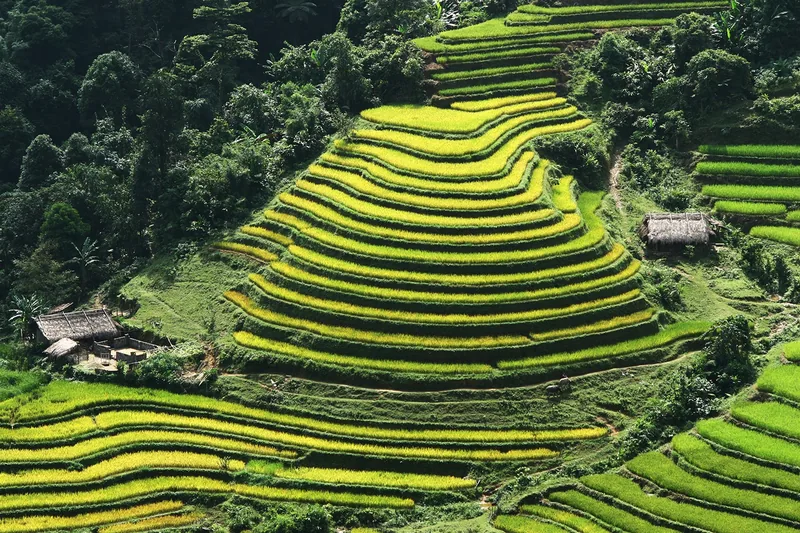
Seasons
Nature calendar
Twelve months of terrace water, green and harvest, waterfall flow, cave season and park conditions.
Read more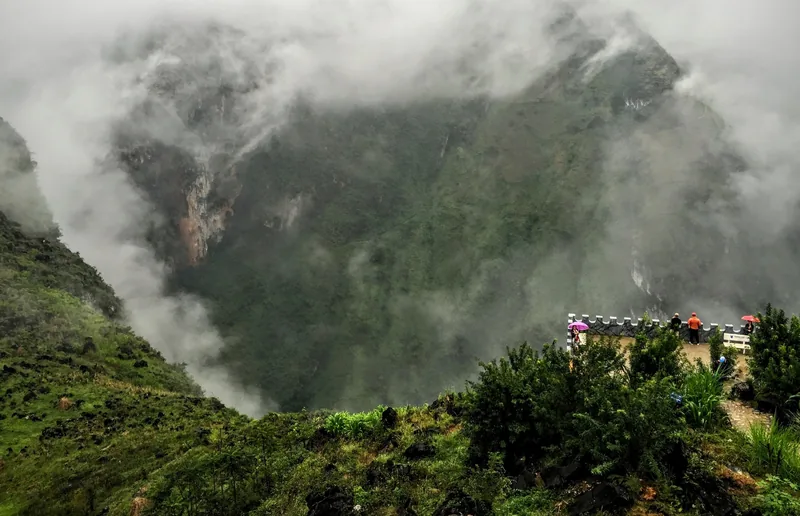
Places · Tuyen Quang
Dong Van Karst Plateau
The geopark, Ma Pi Leng and the Nho Que canyon, seasons, permits, the road from Hanoi and when to skip it.
Read more
Understand
Responsible visiting
Practical rules for caves, terraces, national parks, geoparks and border areas.
Read more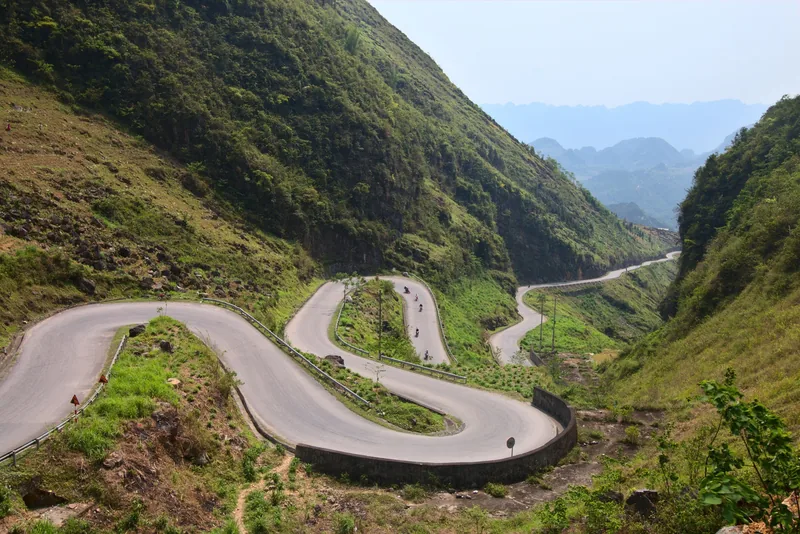
Understand
Weather and closures
Which months bring typhoons, floods and landslides, which sites they close, and how to plan around them.
Read more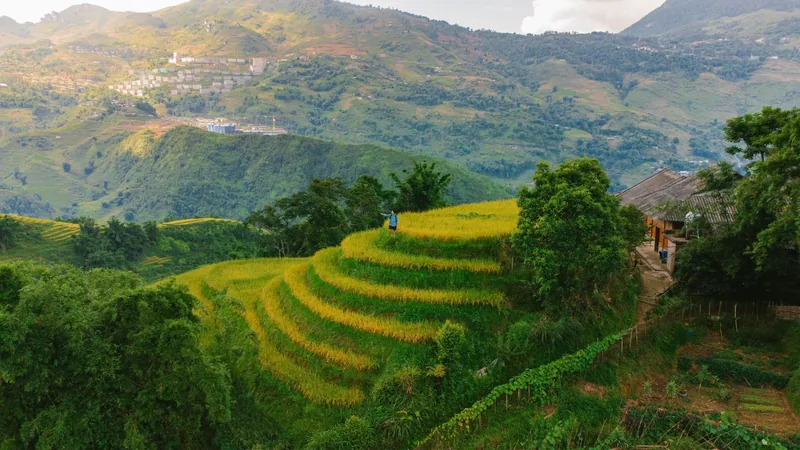
Start planning
Send a correction or a question
Tell us which page you are writing about, what you found on the ground or on an official site, and when. A link to the source helps us check it.