 Caves, terraces, waterfalls and wild places of Vietnam, season by season
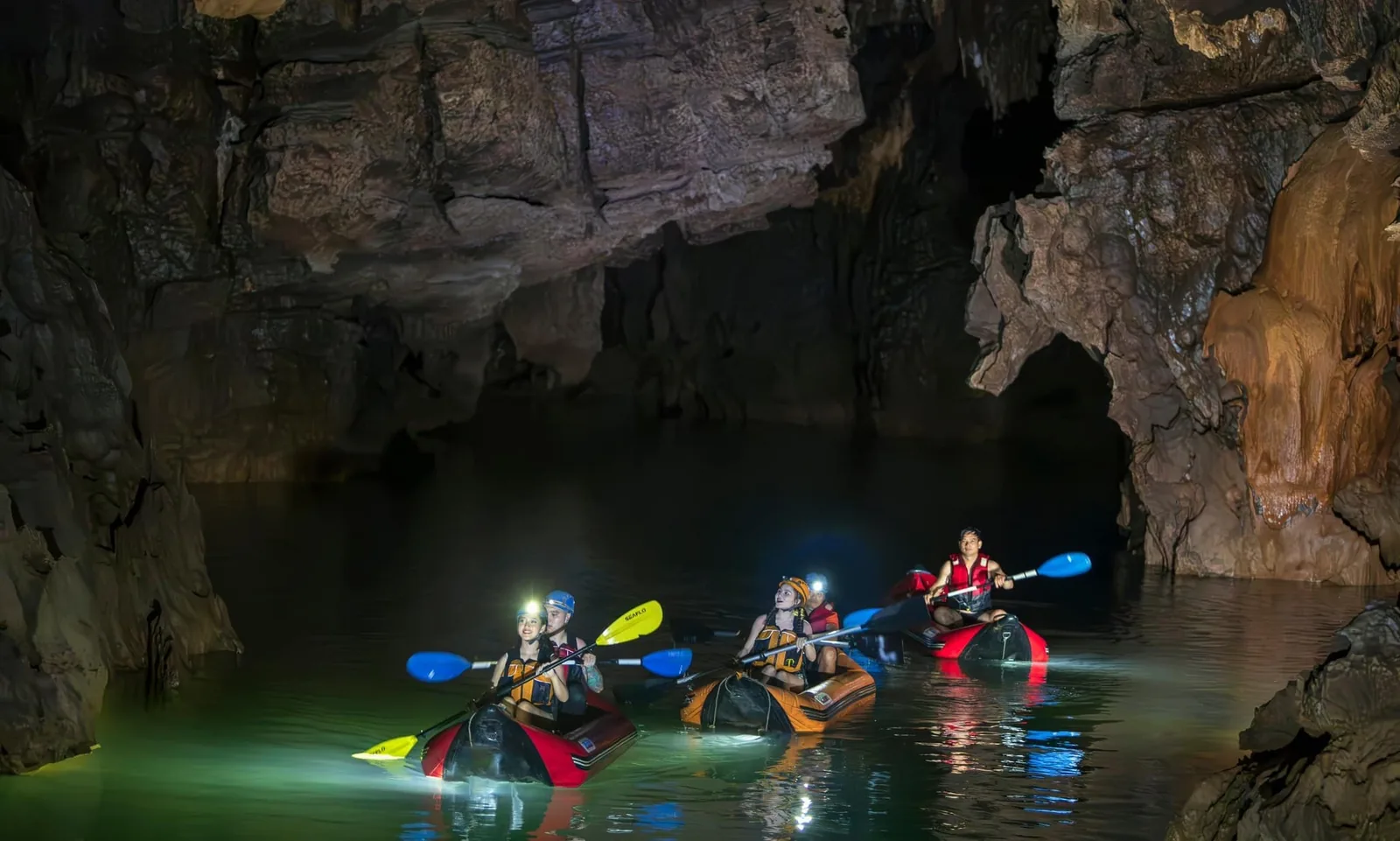
Places · Quang Tri
Phong Nha–Ke Bang: caves you can walk into, and caves you cannot
A limestone massif on the Lao border with river caves, a dry cave over thirty kilometres long and the cave Guinness World Records lists as the largest. Most visitors see two caves in a day. The rest need a guide, a permit or both, and almost all of it closes to the rains at the end of the year.
At a glance
- Province
- Quang Tri (was Quang Binh)
- Park area
- 123,326 ha
- Nearest airport
- Dong Hoi
- Cave season
- Roughly March to August
- Closed or difficult
- October to December
- Nights
- 2–3 for the walk-in caves
What the park is
Phong Nha–Ke Bang National Park was established in December 2001 and enlarged in 2013 to 123,326 hectares. UNESCO inscribed it as a World Heritage site in 2003 for its geology and landforms, and in 2015 extended the listing to cover its ecological processes and biodiversity. In 2025 the listing became a transboundary site with Hin Nam No National Park across the border in Laos, and in June 2026 the area was named a UNESCO World Biosphere Reserve.
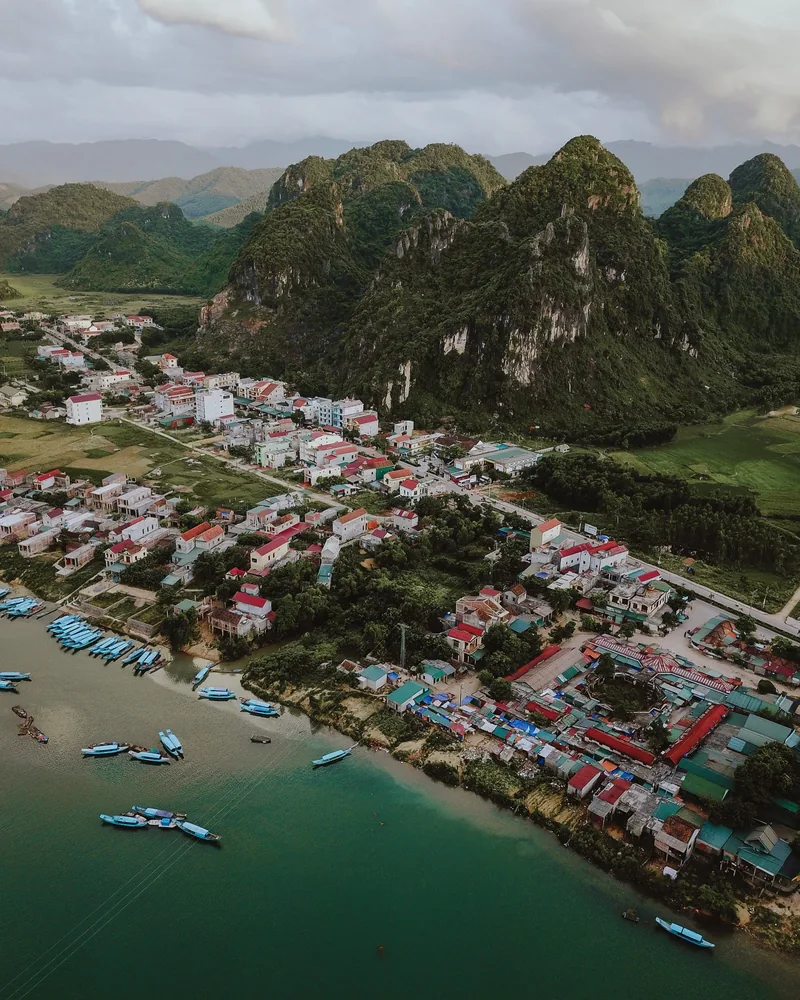
On the ground, that means a large block of forested karst cut by rivers, with a small tourist town, Phong Nha, on the Son River at its eastern edge. The two caves most visitors see are a short distance from town and are run as mass-tourism sites, with ticket counters, boats and lit paths. Beyond them the park becomes a place of guided treks and camping, and the facts change accordingly: group sizes are small, places are limited and fitness matters.
Since 1 July 2025 the area belongs to Quang Tri province, after Quang Binh was merged into it. Signage, tickets and older guides may still say Quang Binh.
Sources: Phong Nha–Ke Bang National Park management board — history of formation; Resolution 202/2025/QH15 on provincial reorganisation, LuatVietnam text · last checked .
The caves, by how you get in
| Cave | How you visit | Time needed | What to know |
|---|---|---|---|
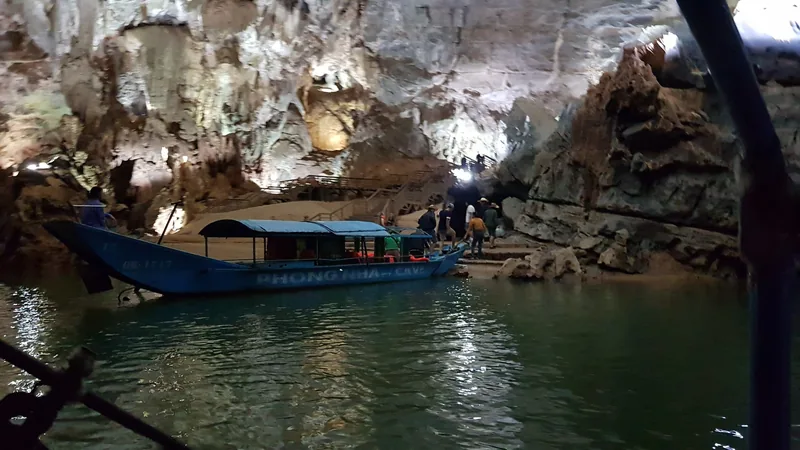
| Phong Nha Cave | Boat along the river into the cave, then a walk | Half day | Ticket plus a shared boat fee per boat |
| Tien Son Cave | Stairs up the hillside near Phong Nha Cave | Add 1 to 2 hours | Often combined with Phong Nha Cave |
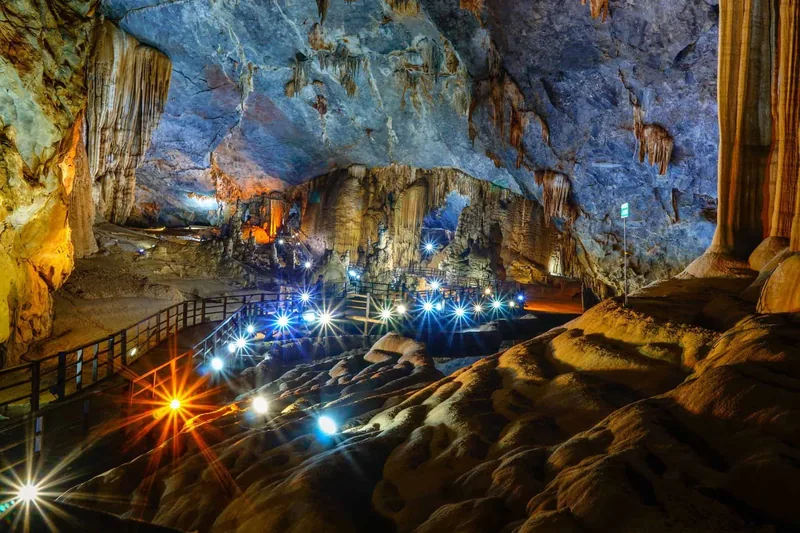
| Paradise Cave (Thien Duong) | Wooden walkway, about 1 km inside | Half day | Surveyed length 31.4 km; inside about 20–22°C |
| Hang Toi (Dark Cave) | Zip line, swim and mud in an unlit cave | Half day | Zip line weight limit 40–90 kg |
| Hang En | Guided trek, optional night at the entrance | 1 day or overnight | Moderate trek; river crossings |
| Tu Lan system | Guided wading, swimming, climbing and crawling | 1 to 4 days | You get wet; swimming needed |
| Hang Va and Nuoc Nut | Guided trek over karst passes | 2 days | Rock pools fullest January to March |
| Hang Son Doong | Expedition with camping in the cave | About 4 days underground | Permit, fitness test, about 1,000 places a year |
The first four are what this guide calls walk-in caves: you buy a ticket on the day, and the main effort is stairs. The rest are guided adventure trips that need booking, and the last three are expeditions in the full sense. The cave guide explains the difference across Vietnam.
Sources: Vietnam National Authority of Tourism — a complete guide to Phong Nha; Jungle Boss — Quang Binh ticket list (commercial operator blog, Vietnamese); Jungle Boss — Paradise Cave guide (commercial operator blog, Vietnamese); Dan Tri International — Son Doong places booked to 2027 (31 March 2026) · last checked .
Son Doong in plain numbers
Guinness World Records lists Hang Son Doong as the largest cave, at around 200 metres high and 150 metres wide, with a length of at least 6.5 kilometres; later surveys put the total at about nine kilometres. A local man, Ho Khanh, found the entrance in 1990, and British cavers surveyed it in 2009. Tourist expeditions began in 2013.
Access is narrow. A single operator holds the permit, the cave takes expeditions from January to August only, and groups are limited to ten visitors supported by about thirty staff. In March 2026 a state news outlet reported that all places for 2026 and 2027 were booked and that the price was close to VND 80 million per person. Applicants have to pass a theory and a practical fitness test.
If Son Doong is the reason for your trip, check availability before anything else. Hang En, which the Son Doong route passes, can be visited on shorter trips with far more availability.
Sources: Guinness World Records — Largest cave; Wikipedia — Hang Son Doong (secondary summary of cited sources); Dan Tri International — Son Doong places booked to 2027 (31 March 2026) · last checked .
How many nights
Two nights is the planning minimum for the walk-in caves: one full day for Phong Nha Cave and Paradise Cave, which are about 20 to 25 kilometres apart by road, and a second day for Hang Toi, the botanical garden or a day trek. Arriving on an evening flight and leaving the next afternoon leaves room for one cave and a long drive.
Add the length of any guided trip as well: Hang En overnight, two days for Hang Va, up to four days for Tu Lan. Those trips start early in the morning, so a night in Phong Nha before and after is sensible.
Sources: Jungle Boss — Paradise Cave guide (commercial operator blog, Vietnamese); Vietnam National Authority of Tourism — a complete guide to Phong Nha · last checked .
When to go
The tourism authority describes October to December as the rainy season, when many caves cannot be reached, and suggests going at other times. The UK Foreign Office gives October to December as the rain season for central Vietnam, with seasonal flooding in October and November. River caves such as Phong Nha Cave depend on the boat route being safe; Paradise Cave sits higher and does not flood the same way, but trails around it turn slippery.
From January the caves reopen gradually and the expedition season starts. Hang Va is at its fullest from January to March. Spring and summer are the main season; summer is hot outside the caves, which stay around 20 to 22°C inside.
Sources: Vietnam National Authority of Tourism — a complete guide to Phong Nha; UK Foreign Office — Vietnam safety and security; Jungle Boss — Paradise Cave guide (commercial operator blog, Vietnamese) · last checked .
Getting there
Dong Hoi has an airport with daily domestic flights from Hanoi and Ho Chi Minh City, and a station on the north–south railway. From Dong Hoi, local buses to Phong Nha run about hourly between 05:00 and 17:00 apart from midday, taking 45 to 90 minutes for about VND 35,000; a taxi costs around VND 400,000. Overnight sleeper buses from Hanoi take about nine hours.
Paradise Cave is further into the park, about 60 to 70 kilometres from Dong Hoi and around an hour by car from Phong Nha. There is no public transport to it that we could source; most people use a hired car, a motorbike or a hotel transfer.
Sources: Vietnam National Authority of Tourism — a complete guide to Phong Nha; Jungle Boss — Paradise Cave guide (commercial operator blog, Vietnamese) · last checked .
What it costs, roughly
| Item | Reported price | Note |
|---|---|---|
| Phong Nha Cave ticket | VND 150,000 per person | Free under 1.3 m |
| Phong Nha boat | VND 550,000 per boat, return | Up to 12 people share one boat |
| Tien Son Cave ticket | VND 80,000 | Shares the Phong Nha boat |
| Paradise Cave | VND 250,000 plus VND 20,000 electric car | Children 1.1–1.3 m half price |
| Paradise Cave 7 km route | VND 2,000,000 per guest | Guided, lunch included |
| Hang Toi adventure ticket | VND 254,000 to 450,000 | Off-peak and peak rates |
| Son Doong expedition | About VND 72 to 80 million | Booked out to 2027 as of March 2026 |
These prices come from a commercial operator's published list and a state news report; we could not find a dated schedule from the management board. Treat them as a range and check before you go. We do not publish hotel prices for Phong Nha.
Sources: Jungle Boss — Quang Binh ticket list (commercial operator blog, Vietnamese); Jungle Boss — Paradise Cave guide (commercial operator blog, Vietnamese); Jungle Boss — Son Doong 2026 (commercial operator blog); Dan Tri International — Son Doong places booked to 2027 (31 March 2026) · last checked .
Pictures

Who should skip it, and when not to go
- Anyone travelling in October to December who wants river caves or treks: the rains close many of them.
- People who cannot manage several hundred steps or long stretches on uneven, damp ground; even the walk-in caves involve both.
- Travellers who want Son Doong next year without a booking: the places were reported taken to the end of 2027.
- Anyone outside the 40–90 kg range who wants the Hang Toi zip line.
- Visitors with only one night and no flight into Dong Hoi: the travel time outweighs the caves.
Common questions
Questions readers ask
Can I visit Phong Nha caves without a tour?
Yes for Phong Nha Cave, Tien Son and Paradise Cave: tickets are sold on site. Hang En, Tu Lan, Hang Va and Son Doong are guided trips only.
Is Son Doong open all year?
No. Expeditions run from January to August, and the cave is closed from September to December.
Will the caves be open in November?
Some may be, many will not. October to December is the rainy season, with flooding in October and November. Keep the plan flexible and check with the site the day before.
Is it Quang Binh or Quang Tri?
Both appear. Quang Binh was merged into Quang Tri province on 1 July 2025, so the official name is now Quang Tri, but many signs and tickets still say Quang Binh.
Related
Read next
Understand
Caves
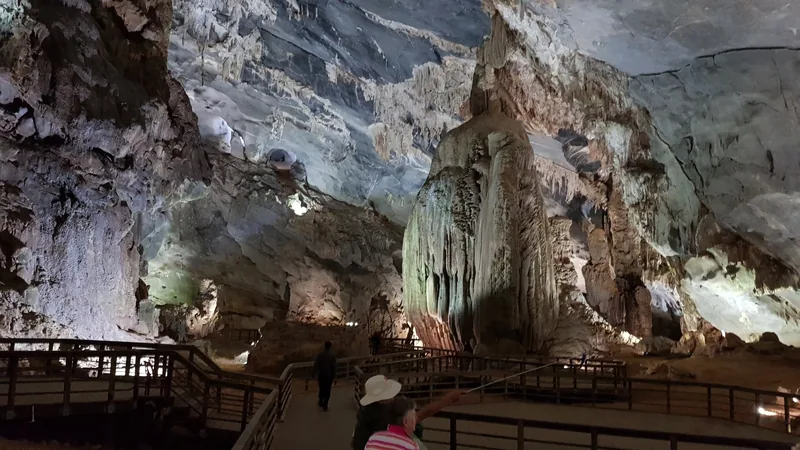
Walk-in caves, guided adventure caves and expedition caves: what each involves, with seasons and limits.
Read more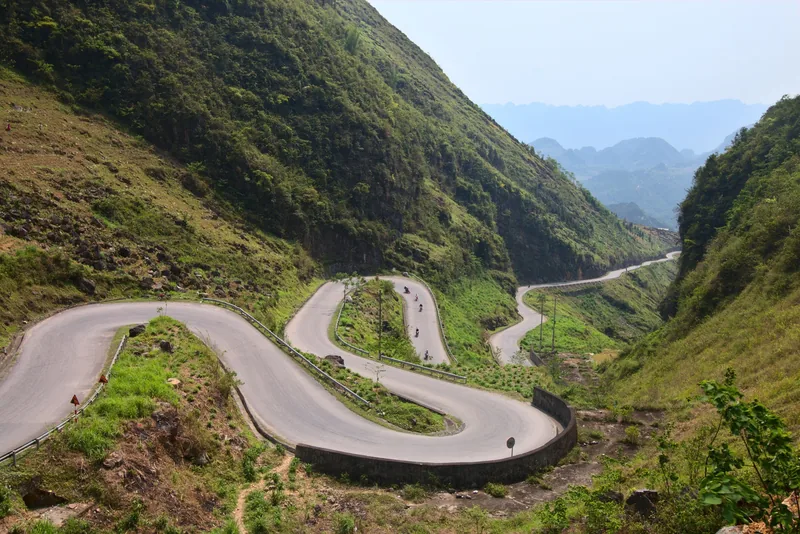
Understand
Weather and closures
Which months bring typhoons, floods and landslides, which sites they close, and how to plan around them.
Read more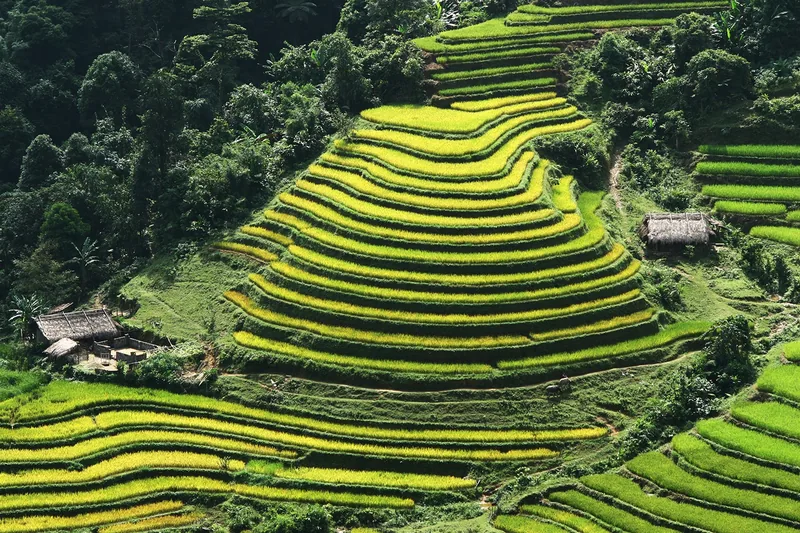
Seasons
Nature calendar
Twelve months of terrace water, green and harvest, waterfall flow, cave season and park conditions.
Read more
Understand
Responsible visiting
Practical rules for caves, terraces, national parks, geoparks and border areas.
Read more
Places
Places
Side-by-side comparison of the four places covered in depth: seasons, travel times and access.
Read more
Understand
National parks and wildlife
Cuc Phuong, Cat Tien and Bach Ma: likely sightings, what needs luck, seasons and rescue centres.
Read more
Start planning
Send a correction or a question
Tell us which page you are writing about, what you found on the ground or on an official site, and when. A link to the source helps us check it.